
SixSixSix: slot review — symbols, bonus features and winning potential
SixSixSix is a high-volatility video slot from Hacksaw Gaming, released in July 2024, with a cartoonish “hellscape” style and a feature set built around its Wicked Wheels and the recurring ‘6’ theme. In 2026 it’s still widely listed in casino lobbies because it fits the studio’s modern formula: short base-game build-up, sharp volatility spikes, and bonus rounds that can swing hard in either direction. The point of this review is practical: what the symbols do, how the bonuses trigger, and what you can realistically check before staking real money.
Game setup in 2026: layout, paylines, volatility and headline numbers
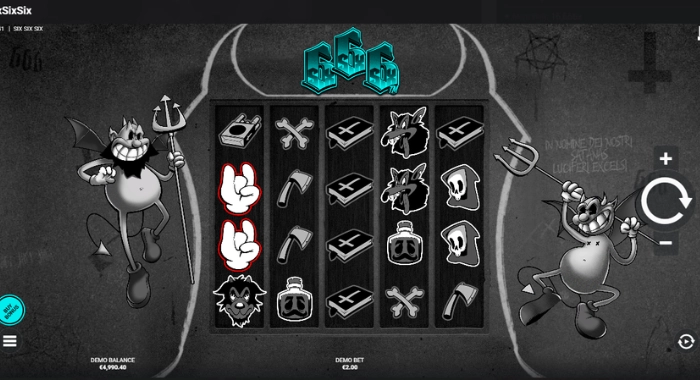
SixSixSix uses a 5-reel, 4-row grid with 14 paylines, and it’s positioned as a high-volatility title with a top payout advertised as 16,666x your stake. Those numbers matter because they tell you what sort of session to expect: long stretches of small or no returns can happen, and the bigger outcomes tend to be concentrated inside feature play. As a rule, you should treat it as a “set a budget first” slot rather than something to grind steadily.
RTP is the next thing most players look at, and this is where you have to be careful: different casinos can run different RTP configurations for the same slot. You’ll see sources citing 96.15% RTP, but you’ll also find lower figures published elsewhere, which is a strong hint that multiple RTP settings exist in the wild. In practice, the only reliable method is to open the game info panel inside the casino and read the RTP shown there for that specific version.
On the mechanical side, the game’s identity is tied to its Wicked Wheels and the special ‘6’ symbols that interact with them. Instead of relying solely on classic free-spin scatters, SixSixSix leans into feature triggers based on how many wheels are activated at once, then adjusts the wheel behaviour during bonus play. That’s why many sessions feel quiet until the right combination lands and the game suddenly accelerates.
Theme and UX: what’s actually useful to know before you spin
Visually, SixSixSix leans into monochrome, rubber-hose cartoon energy rather than graphic horror. That isn’t just a style choice — it helps readability: you can quickly spot the ‘6’ symbols, the wheel interactions, and when the game is signalling a potential feature. If you play on mobile (which is common by 2026), this clarity matters because small-screen sessions can otherwise become fatiguing in high-volatility slots.
Audio and animation are intentionally punchy, but the core UX point is the information layer: paytable access, feature explanations, and the way the game confirms which bonus you’ve triggered. Before betting anything meaningful, take 30 seconds to open the rules and verify three things: paylines (14), the max win statement, and whether a “bonus buy” option is offered in your jurisdiction. Availability can vary by operator and region.
Finally, remember that volatility is a design choice, not a promise of value. A slot with a large headline max win can still deliver a poor session if you chase it without structure. If you want a simple guardrail: decide in advance how many spins you’ll play and what loss limit ends the session. That approach keeps the game entertaining without turning it into a budget leak.
Symbols and paytable logic: what typically drives base-game wins
The regular symbol set does the usual job: it provides the background of line wins that keeps the balance moving while you wait for features. In SixSixSix, these wins can feel modest because the game’s bigger potential is concentrated into the Wicked Wheels and free-spin variants. That doesn’t make base play pointless; it just means you should judge the slot by how it behaves around triggers, not by how often you see mid-size hits.
The special ‘6’ symbols are the real headline. They appear as the key “event” symbol family in this title, and they are tied directly to Wicked Wheels behaviour. Think of them as the game’s steering wheel: when they land in the right pattern, they don’t just award a line win — they change what can happen next, including moving you into one of the free-spin feature modes.
Because RTP can vary by casino configuration, your evaluation should focus on measurable things you can verify: payline count, bet range, and the rules for feature activation. If the casino’s information panel is vague or missing the RTP statement, that’s a practical red flag — not because the game is “rigged”, but because you’re being asked to bet without basic transparency.
Wicked Wheels and the “6” symbol family: how the feature engine behaves
Landing a ‘6’ symbol on two Wicked Wheels at the same time can activate a bonus that starts with 10 free spins, and landing a ‘6’ on three Wicked Wheels at the same time activates a higher-tier bonus variant. In both cases, the trigger condition is about simultaneous wheel activation, not a vague “collect enough scatters” mechanic. That’s why the game can feel binary: nothing… then a clean jump into feature play.
During bonus play, wheel behaviour changes. In one Free Spins variant, the chance of Red Wicked Wheels is increased and Blue Wicked Wheels are removed from appearing in that mode. This kind of rule matters because it changes your expected distribution of outcomes inside the feature, even when the spin count looks identical.
In 2026, many casinos also label whether the game includes a “bonus buy” option. If it’s available to you, treat it as a pricing decision rather than a shortcut to “better odds”: you’re paying for more feature exposure in fewer spins, not guaranteed profit. If one purchase consumes most of your bankroll, you’ve already forced the session into an all-or-nothing shape.
Bonus rounds: Free Spins modes, upgrades and what to watch for
SixSixSix puts most of its potential into bonus play, and it uses more than one Free Spins mode. The key practical point is simple: not all Free Spins triggers are equal, so when you enter a bonus, check which variant you’ve activated and what it changes (wheel behaviour, symbol frequency, or upgrade options).
The bonus rounds are also “stateful”: it’s not just spins, it’s spins plus altered probabilities. That makes the same number of free spins feel wildly different from one trigger to the next. If your goal is to understand the slot quickly, focus on the rule changes (for example, when certain wheel colours are more likely) rather than memorising every standard symbol payout.
The advertised max win is useful as a boundary for expectations, but it’s not a realistic target for most sessions. A better way to judge the game is whether the feature cadence fits your tolerance: if you dislike long quiet stretches, high-volatility slots like this can feel exhausting. If you enjoy the tension and keep stakes disciplined, it can be entertaining within a controlled bankroll plan.
“Let Hell Break Loose!” and “What the Hell”: trigger rules and in-feature behaviour
“Let Hell Break Loose!” is a Free Spins feature that activates by landing a ‘6’ symbol on two Wicked Wheels at the same time in the base game, and it begins with 10 free spins. In this mode, wheel behaviour is adjusted so the chance of Red Wicked Wheels increases while Blue Wicked Wheels are removed, which is a concrete shift in the feature’s dynamics.
“What the Hell” activates by landing a ‘6’ symbol on three Wicked Wheels at the same time. This is the higher-threshold trigger, so it’s naturally rarer than the two-wheel activation. When it hits, the bonus tends to be more feature-forward, and the session swings can be sharper than in the lower-tier Free Spins mode.
Some versions of the game include an upgrade-style decision inside feature flow. If your version offers it, treat it as a risk management choice: it can improve the bonus, but it can also reduce what you already have. The healthiest approach is to decide your rule before emotions take over — for example, only attempting an upgrade when the initial state is clearly weak for your staking plan.
Read also
-
 Exploring the Thrills of Blazing Wilds Megaways Slot Game
Blazing Wilds Megaways, a dynamic and thrilling slot game, was …
-
 Delving into the Depths: “Beast Below” Slot G...
The intriguing world of slot games is vast, offering experiences …
-
 Safari Heat Slot Review
Playtech is a name well known to almost every enthusiast …
-
SixSixSix: slot review — symbols, bonus features and winn...
SixSixSix is a high-volatility video slot from Hacksaw Gaming, released …